The science of tadalafil and muscle growth
Is tadalafil (Cialis) the next big muscle-building hack? Despite promising new 2026 data on myostatin suppression and muscle cell proliferation, the clinical reality tells a different story. Explore the molecular science, the clinical trials, and why off-label use might actually increase muscle damage in healthy athletes.
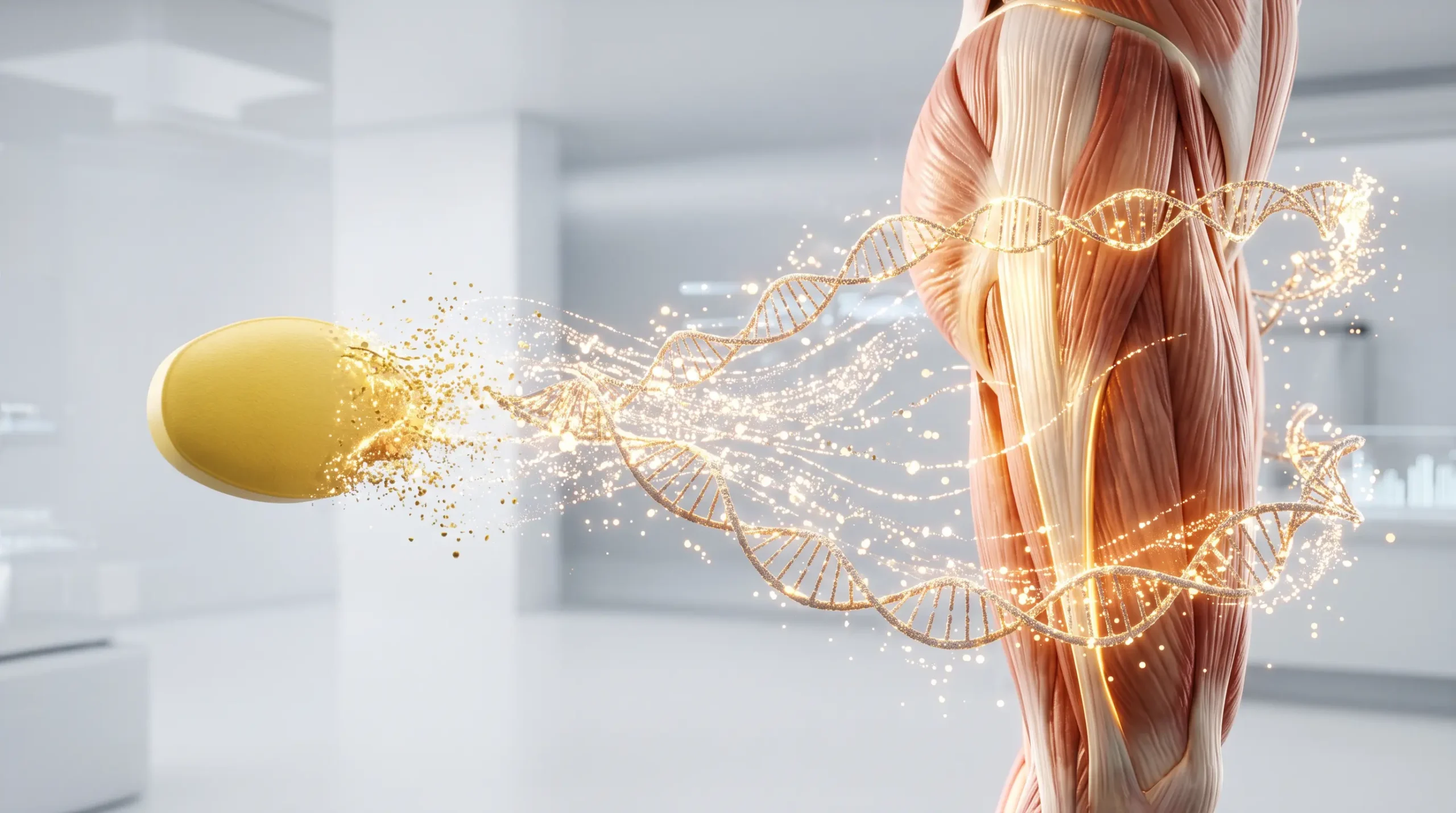
If you spend enough time in fitness or longevity circles, you will inevitably hear rumors about tadalafil (the active ingredient in Cialis) being used off-label as a muscle-building or anti-catabolic agent. Recently, this chatter was fueled by a 2026 preclinical study suggesting that prolonged exposure to tadalafil promotes skeletal muscle myogenesis (muscle growth).
Before you assume a common erectile dysfunction medication is the next major hypertrophy hack, we need to look at the full body of evidence. The leap from a petri dish to functional human muscle is massive, and the reality of how PDE5 inhibitors affect muscle tissue is highly dependent on dose, duration, and whether your muscles are actually “sick” enough to benefit.
Here is a comprehensive, science-backed breakdown of how tadalafil impacts muscle tissue, how it theoretically interacts with the myostatin pathway, and why healthy athletes might actually be doing more harm than good.
1. Proliferation vs. differentiation
The buzz around tadalafil’s muscle-building potential largely stems from in vitro data specifically, how it affects C2C12 cells (mouse muscle myoblasts) in a lab.
The 2026 study by Antinozzi & Di Luigi found that prolonged tadalafil exposure (up to 7 days) expanded the muscle progenitor pool. It increased cell survival and upregulated early markers like Pax7 and Myf6. Interestingly, it delayed terminal differentiation—meaning it kept the cells in a proliferative, regenerative state rather than immediately fusing them into mature muscle fibers.
This contrasts with earlier, short-term studies (24–72 hours) which showed tadalafil accelerated differentiation, increasing markers like MyoD, myogenin, and myosin heavy chain (MyHC).
The takeaway? Tadalafil likely has a biphasic effect. In the short term, it primes cells to fuse into muscle fibers. Over a prolonged period, it holds cells in a regenerative “reserve” state. Both can be beneficial for repairing tissue, but this is a far cry from proving it builds massive biceps in humans.
2. Putting the brakes on myostatin
To understand how tadalafil alters muscle, we have to look at myostatin—the body’s primary molecular brake on muscle growth. Myostatin drives muscle breakdown and stops muscle growth by activating a pathway involving proteins called Smad2 and Smad3.
When Smad2/3 are activated, they enter the nucleus and trigger the degradation of muscle proteins (via FoxO, MuRF1, and atrogin-1). Tadalafil, a PDE5 inhibitor, amplifies the NO–cGMP–PKG signaling pathway, which intercepts this catabolic process at multiple levels:
- Smad3 Blocking: The PKG system phosphorylates Smad3 in a way that prevents it from entering the nucleus.
- The BMP Pathway Synergy: By locking out Smad2/3, tadalafil theoretically frees up a shared co-factor called Smad4. Smad4 can then partner with Smad1/5/8—the “BMP pathway”—which is the fundamental driver of muscle hypertrophy.
- PGC-1α4 Upregulation: Tadalafil has been shown to upregulate PGC-1α, shifting muscles toward a more oxidative, damage-resistant fiber type and suppressing atrophy genes.
Mechanistically, tadalafil acts as a mild, indirect myostatin suppressor. However, it’s crucial to note that pharmaceutical companies have spent billions developing direct, incredibly potent myostatin inhibitors. While those drugs successfully added lean mass in trials, they almost universally failed to improve functional strength.
3. Does it work in humans?
The single most important rule for PDE5 inhibitors in muscle science is that benefit tracks closely with the degree of baseline NO-cGMP impairment.
Tadalafil works by amplifying a signal. If your signaling is broken (due to obesity, aging, type 2 diabetes, or heart failure), tadalafil helps. If you are a healthy, normoxic athlete, it does almost nothing.
- The Positive Signal: A small, open-label study (Aversa et al.) in middle-aged men with mild erectile/endothelial dysfunction showed that 5 mg of daily tadalafil for two months increased abdominal lean mass and decreased fat. However, a rigorous, double-blind, placebo-controlled trial (MAKROTAD) in type 2 diabetics found no significant change in lean body mass.
- The Duchenne Failure: Tadalafil was heavily investigated for Duchenne Muscular Dystrophy (DMD). Despite incredible preclinical promise, a massive Phase 3 trial was a complete failure. Why? Because dystrophic human muscle downregulates PDE5. The drug had no target to act upon.
4. Exercise and TRT
If tadalafil alone isn’t a magic bullet, what about stacking it?
PDE5 Inhibitors + Exercise:
There is real data here, but it’s a double-edged sword. In diet-induced obese mice and older men with endothelial dysfunction, combining PDE5 inhibitors with exercise restored microvascular blood flow and improved exercise capacity. However, once older men became highly trained, the blood-flow benefit of the drug vanished, because the exercise itself fixed the biological deficit.
PDE5 Inhibitors + TRT (Testosterone/BMP stimulators):
Mechanistically, combining tadalafil with testosterone or a myostatin inhibitor makes perfect sense on paper. The androgen receptor cooperates with SMAD4 to potentiate muscle growth, and tadalafil increases the endogenous T/E ratio. However, zero published preclinical studies have actually co-administered these agents to measure synergistic muscle growth. It remains a fascinating but entirely unproven hypothesis.
5. Why healthy athletes could reconsider
The most damning piece of evidence against off-label use for healthy gym-goers is how high-dose tadalafil interacts with intense exercise.
In a crossover trial of healthy, fit men, taking a high dose of tadalafil (20 mg) before exhaustive exercise actually worsened muscle damage. The tadalafil group saw a 75% spike in Creatine Kinase (CK), a 36% spike in LDH, and a massive drop in antioxidant capacity (GSH/GSSG ratio).
Instead of protecting the muscle, prolonged, high-dose exposure made the muscle more susceptible to exercise-induced oxidative stress. Furthermore, animal studies show that supraclinical doses of sildenafil in trained healthy rats actually promoted gastrocnemius fiber atrophy, and the exact opposite of the desired effect.
The Verdict
Tadalafil is a fascinating molecule with a biologically coherent mechanism for suppressing myostatin and preserving muscle progenitor cells. For older populations or those with severe metabolic and endothelial dysfunction, it holds real therapeutic promise.
But if you are a healthy, active individual taking Cialis purely for muscle hypertrophy, you are operating entirely outside the evidence. You are relying on petri-dish mechanics that have failed to translate into functional strength in human trials, and you may even be increasing your exercise-induced muscle damage in the process.
Key takeaways
- Mechanistic Promise:In vitro studies show tadalafil can suppress the myostatin/TGF-β pathway by blocking Smad3 and upregulating PGC-1α, keeping muscle progenitor cells in a regenerative state.
- Context is Everything: Human benefits are almost exclusively limited to populations with impaired NO-cGMP signaling (like older adults, diabetics, and those with endothelial dysfunction).
- The Mass-Function Gap: Even when drugs successfully suppress myostatin to build mass, it rarely translates to functional strength gains in human trials.
- Risk for Healthy Athletes: Studies show that taking high-dose tadalafil before exhaustive exercise can actually worsen muscle damage markers (CK, LDH) and lower cellular antioxidant capacity.
FAQ
Does tadalafil build muscle in humans?
Currently, there is no robust clinical evidence proving tadalafil builds functional muscle in healthy humans. One small, open-label study showed modest lean mass gains in middle-aged men with mild erectile dysfunction, but larger, placebo-controlled trials (like MAKROTAD in diabetics) showed zero change in lean body mass.
How does tadalafil affect myostatin?
Tadalafil amplifies the NO-cGMP-PKG pathway. On a cellular level, PKG can phosphorylate Smad3 (a protein activated by myostatin). This prevents Smad3 from entering the nucleus, effectively “putting the brakes” on the catabolic (muscle-wasting) signals normally driven by myostatin.
Is it safe to take tadalafil daily for bodybuilding?
While low-dose daily tadalafil (2.5–5mg) is well-tolerated for its approved uses (ED and BPH), taking it off-label for bodybuilding is unproven and potentially counterproductive. Clinical data shows that in healthy, fit men, high doses of tadalafil combined with exhaustive exercise actually increased markers of muscle damage and oxidative stress.
Why did tadalafil fail in muscular dystrophy trials if the science is so strong?
While the preclinical animal data was incredibly strong, human trials failed because dystrophic human muscle actually lacks the PDE5 enzyme. Tadalafil works by blocking PDE5; if the target is missing due to the disease state, the drug cannot produce a functional benefit.